Commercial Waste Thamesmead: Recycling and Sustainability in an Eco-Friendly Waste Disposal Area
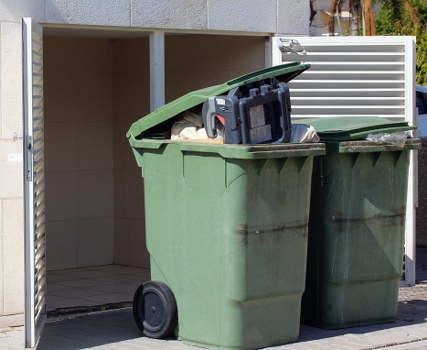 Commercial Waste Thamesmead is evolving into a model for an eco-friendly waste disposal area across southeast London. Our approach brings together practical recycling routes, low-carbon logistics and community partnerships to transform Thamesmead commercial waste handling into a truly sustainable rubbish area. This page explains our targets, how local boroughs' separation policies shape operations, and how transfer stations and charity collaborations help keep usable materials in circulation.
We set an ambitious recycling percentage target to drive measurable change: a baseline aim of 50% commercial recycling by 2026 rising to 65% by 2029. These targets for Thamesmead commercial waste are aligned with the wider ambitions of the Royal Borough of Greenwich and the London Borough of Bexley, which encourage separate collection streams for dry recycling, glass and food waste where possible. By setting clear targets we make performance visible and actionable across our service area.
 A key part of delivering as a low-impact Thamesmead commercial waste partner is working within borough separation schemes. Many businesses in the area already segregate paper, card, metals and mixed plastics at source according to borough guidance. We support these local approaches by offering tailored bin layouts and staff training to improve capture rates for recyclable materials and reduce contamination.
Local Transfer Stations and Material Flows
Our logistics for sustainable rubbish area operations use nearby transfer stations to shorten haul distances and reduce emissions. Collection routes commonly feed into transfer stations at Belvedere and Beckton — strategic hubs that allow materials to be consolidated for onward recycling and recovery. These local transfer stations help keep Thamesmead commercial recycling circuits efficient and cost-effective.
At the transfer hubs, materials are sorted and assessed for reuse, recycling, or energy recovery. We prioritise re-processing options where markets exist and divert organic and food waste streams toward anaerobic digestion where permitted. This layered sorting approach increases the overall recycling percentage for commercial waste in Thamesmead and minimizes landfill disposal.
 To protect the environment and improve air quality locally, our fleet strategy prioritises low-carbon vans and electric vehicles for short local runs. Where electric vehicles are not yet feasible for heavier loads, we deploy the latest Euro VI diesel and hybrid models. The combination of optimised routing, consolidated drop-offs and low-emission vehicles reduces the carbon intensity of each tonne of waste handled in the Thamesmead area.
Partnerships with Charities and Reuse Initiatives
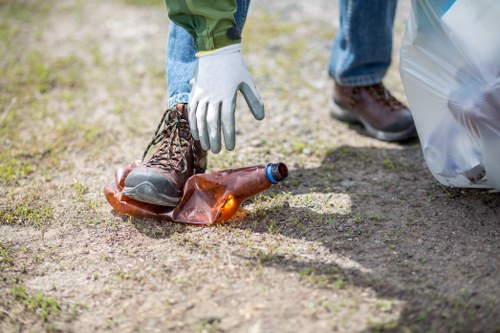 Reuse is as important as recycling. In Thamesmead we work with local charities and social enterprises to keep furniture, textiles and functional fixtures out of the waste stream. Partnerships with donation-led organisations and community reuse centres allow businesses to divert quality items for redistribution, training and refurbishment programmes, supporting social value while reducing waste.
These collaborations help convert commercial waste in Thamesmead into community benefit: surplus office furniture finds new homes with charities supporting employability; surplus building materials are passed to social enterprises running DIY training courses; and office IT equipment is cleared, data-wiped and given a second life where possible. Each reuse instance contributes directly to our recycling percentage target and to circular-economy outcomes for the boroughs we serve.
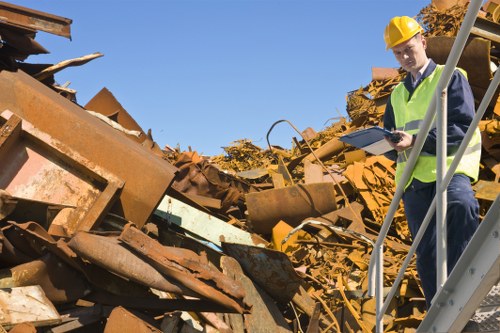 Our services for a sustainable rubbish area also include proactive waste audits and tailored waste plans for businesses of all sizes. By identifying high-volume waste streams and recommending separation, we reduce costs for clients while improving environmental performance. Practical measures include segregated containers for cardboard and mixed recyclables, dedicated food waste collection where applicable, and secure e-waste handling for electronics.
To summarise how we deliver on Commercial Waste Thamesmead sustainability: we combine measurable targets (50% by 2026, 65% by 2029), efficient use of local transfer stations, strong partnerships with charities and reuse networks, and a modern low-carbon fleet. These elements together create an effective eco-friendly waste disposal area that supports borough waste separation policies and advances circular economy goals.
What businesses can expect:
- Clear recycling targets linked to regular reporting so progress is tracked against the Thamesmead commercial waste goals.
- Optimised collections using low-emission vans and local transfer stations to reduce carbon and cost.
- Charity partnerships to maximise reuse opportunities and boost social value from surplus items.
- Support for borough separation schemes including practical bin configurations that respect Greenwich and Bexley approaches to food, glass and dry recycling.
Our commitment is to continue developing the Thamesmead sustainable rubbish area through collaboration, innovation and transparent targets. By focusing on higher capture rates, localised transfer station use and community-driven reuse, we aim to make commercial waste in Thamesmead a catalyst for greener growth and cleaner neighbourhoods.
